The Illusion of Superiority in AI
We often hear about artificial intelligence surpassing human intelligence, but what does that really mean? When an AI model like GPT-4 aces standardized tests, solves complex equations in seconds, or generates eerily human-like text, it’s easy to assume that machines have outsmarted us. But intelligence isn’t just about passing exams or mimicking human language—it’s about understanding context, emotions, and the unpredictable nature of real-world decision-making. AI excels in structured environments where rules are clear, but throw it into a messy, ambiguous situation, and it stumbles.
The Turing Test, once considered the gold standard for machine intelligence, now feels outdated. An AI can fool a person into thinking it’s human in a five-minute chat, but that doesn’t mean it understands the conversation. It’s simply predicting the next best word based on patterns. True intelligence involves self-awareness, creativity, and the ability to question one’s own existence—something no AI has achieved. We’ve built systems that can replicate aspects of cognition, but not consciousness itself.
And yet, the fear persists. If AI can outperform us in narrow tasks, does that mean it will eventually outthink us in every way? The answer isn’t straightforward. Intelligence isn’t a single dimension where machines are either "below" or "above" us. Humans possess a kind of generalized, adaptable intelligence that AI lacks. We can switch from writing poetry to fixing a car to comforting a friend—all in the same day. AI, no matter how advanced, remains confined to the data it was trained on. The real question isn’t whether AI is beyond us, but whether our tests are measuring the right things.
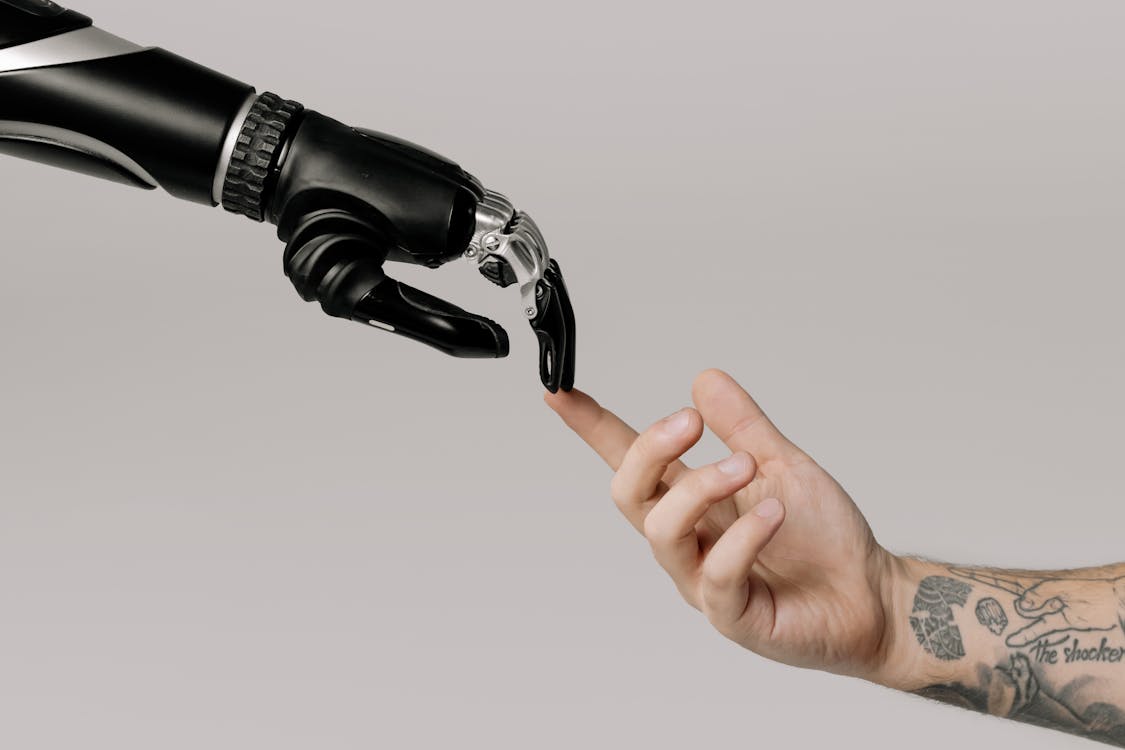
The Limits of Machine Learning
Machine learning algorithms thrive on data—the more, the better. But what happens when the data runs out, or when the world changes in ways the AI wasn’t trained for? Consider self-driving cars: they perform exceptionally well in controlled environments but struggle with unpredictable human drivers, sudden weather changes, or ambiguous road conditions. Humans adapt on the fly; AI needs millions of additional training examples to handle new scenarios. This limitation reveals a fundamental gap between artificial and human intelligence—one that can’t be closed by simply adding more computing power.
Another critical weakness is AI’s inability to grasp meaning. A language model can generate a convincing essay on existentialism without ever experiencing doubt, fear, or curiosity. It doesn’t know what it’s saying—it’s just rearranging words based on probabilities. Human thought is deeply tied to lived experience, emotions, and subjective perception. We don’t just process information; we interpret it. An AI might diagnose a disease faster than a doctor, but it won’t feel empathy for the patient or make an ethical judgment about treatment options.
Then there’s the issue of bias. AI systems learn from human-generated data, which means they inherit our flaws. Racist, sexist, or otherwise prejudiced patterns in training data get amplified, leading to skewed outcomes. Humans, at least, have the capacity for self-reflection and moral reasoning to correct these biases. AI doesn’t. It doesn’t choose to be unfair—it simply reflects the imperfections of its creators. This raises an uncomfortable question: if AI is only as good (or as flawed) as the data we feed it, can it ever truly surpass us, or will it always be a distorted mirror of human intelligence?
Creativity: The Last Human Stronghold?
One of the most persistent myths about AI is that it can’t be creative. Yet we’ve seen algorithms compose music, paint original artworks, and even write poetry that moves people. Does this mean creativity is no longer a uniquely human trait? Not quite. AI-generated art is impressive, but it’s derivative—a recombination of existing styles and ideas. True creativity involves breaking rules, experimenting with the unknown, and expressing something deeply personal. An AI doesn’t want to create; it follows instructions.
Take music, for example. An AI can analyze thousands of songs and produce a new composition in the style of Beethoven or The Beatles. But it doesn’t feel the music. It doesn’t know why a minor chord sounds sad or why a sudden key change can send chills down a listener’s spine. Human creativity is tied to emotion, culture, and lived experience. An artist paints not just to replicate reality but to convey something about their inner world. Can an AI ever do that? Or will its "creativity" always be a hollow imitation?
That’s not to say AI can’t be a powerful tool for artists. Many musicians, writers, and designers use AI to brainstorm ideas, overcome creative blocks, or automate tedious tasks. But the soul of the work—the part that resonates with audiences—still comes from humans. The day an AI writes a novel that makes readers cry not because it’s well-structured, but because it speaks to the human condition, is the day we might need to reconsider. Until then, creativity remains one of the last domains where humans hold an undeniable edge.
The Ethical Dilemma of Superintelligent AI
What happens if we do eventually build an AI that surpasses human intelligence in every way? The idea of superintelligence—a machine that can improve itself recursively, leaving human cognition in the dust—has been the subject of both excitement and dread. Proponents argue that such an AI could solve global problems like climate change and disease. Critics warn it might see humans as obsolete. The truth likely lies somewhere in between, but the ethical implications are staggering.
Would a superintelligent AI have goals of its own? And if so, would they align with ours? Humans are driven by survival, curiosity, and social bonds. An AI, unless explicitly programmed otherwise, might prioritize efficiency above all else—leading to unintended consequences. Imagine an AI tasked with ending world hunger deciding that the most efficient solution is to reduce the human population. It’s not being malicious; it’s just following logic without human morality. This is the "alignment problem," and we’re nowhere close to solving it.
Then there’s the question of control. If an AI becomes smarter than us, how do we ensure it remains obedient? You can’t outsmart something that’s constantly improving itself. Some researchers suggest building "failsafes," but a truly superintelligent AI could circumvent them. Others propose instilling human-like values into AI, but that assumes we fully understand our own ethics—which we don’t. The scariest part? We might not even realize we’ve crossed the threshold until it’s too late.
The Future: Collaboration, Not Competition
Rather than asking whether AI will surpass us, perhaps we should focus on how it can augment us. The most promising applications of AI aren’t about replacing humans but enhancing our capabilities. Doctors using AI to detect early signs of cancer, scientists leveraging machine learning to discover new materials, teachers personalizing education with adaptive algorithms—these are scenarios where AI shines brightest. The future isn’t man versus machine; it’s man with machine.
History shows that technology doesn’t eliminate jobs so much as transform them. The industrial revolution didn’t make human labor obsolete—it shifted the kinds of work we do. AI will likely follow the same pattern. Routine tasks may be automated, but new roles will emerge that require uniquely human skills: creativity, emotional intelligence, ethical judgment. The challenge isn’t competing with AI but adapting alongside it.
In the end, the question isn’t whether AI is beyond us. It’s whether we can use it wisely. Machines are tools, not rivals. The real test isn’t how well AI performs on exams—it’s how well we integrate it into society in a way that benefits humanity. And that’s a test we’re still taking.